
Buying a home elevator is a major decision — but choosing who to buy it from matters just as much as choosing the elevator itself. The supplier determines the quality of the machine, the accuracy of the quotation, the smoothness of installation, and the quality of support you get for years afterward.
This guide walks through the seven things every buyer should check before ordering a home elevator, plus the red flags that should send you looking elsewhere.
1. Start With Your Own Requirements
Before comparing suppliers, define what you actually need. A supplier can only give you an accurate quotation if you know your own numbers first:
| Your question | What to prepare |
|---|---|
| How many floors? | 2, 3, 4+ floors determines the drive type |
| Where does it go? | Stairwell, hallway, room corner, outdoor |
| How much space? | Shaft footprint — compact designs start from ~1 m² |
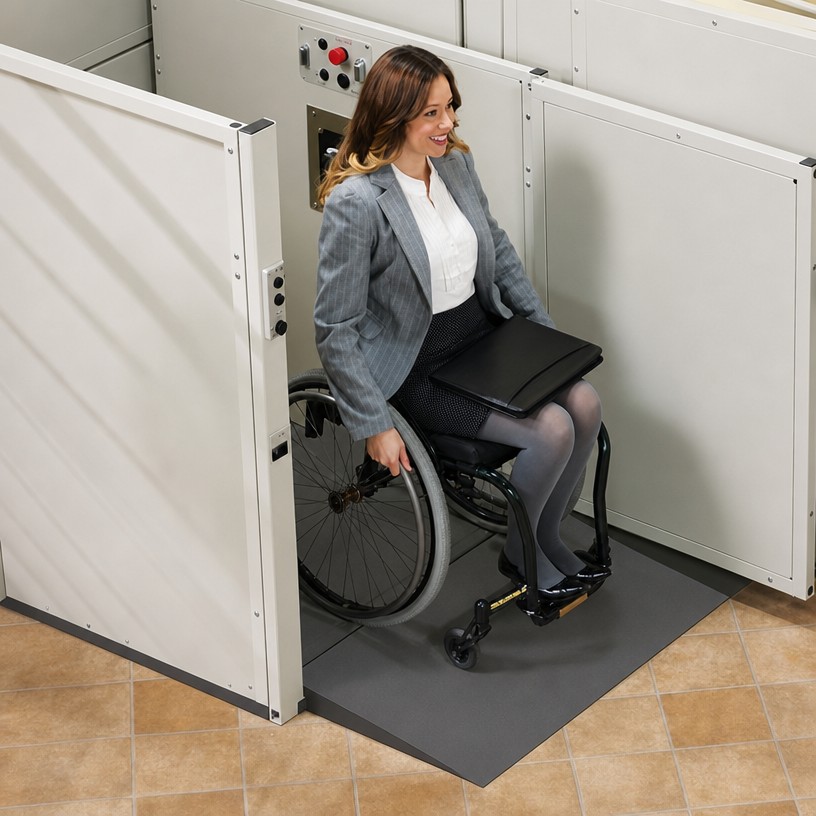
| Who uses it? | Elderly family members, wheelchair, daily heavy use |
| Indoor or outdoor? | Enclosure requirements differ |
| Budget? | Set a realistic range before you start |
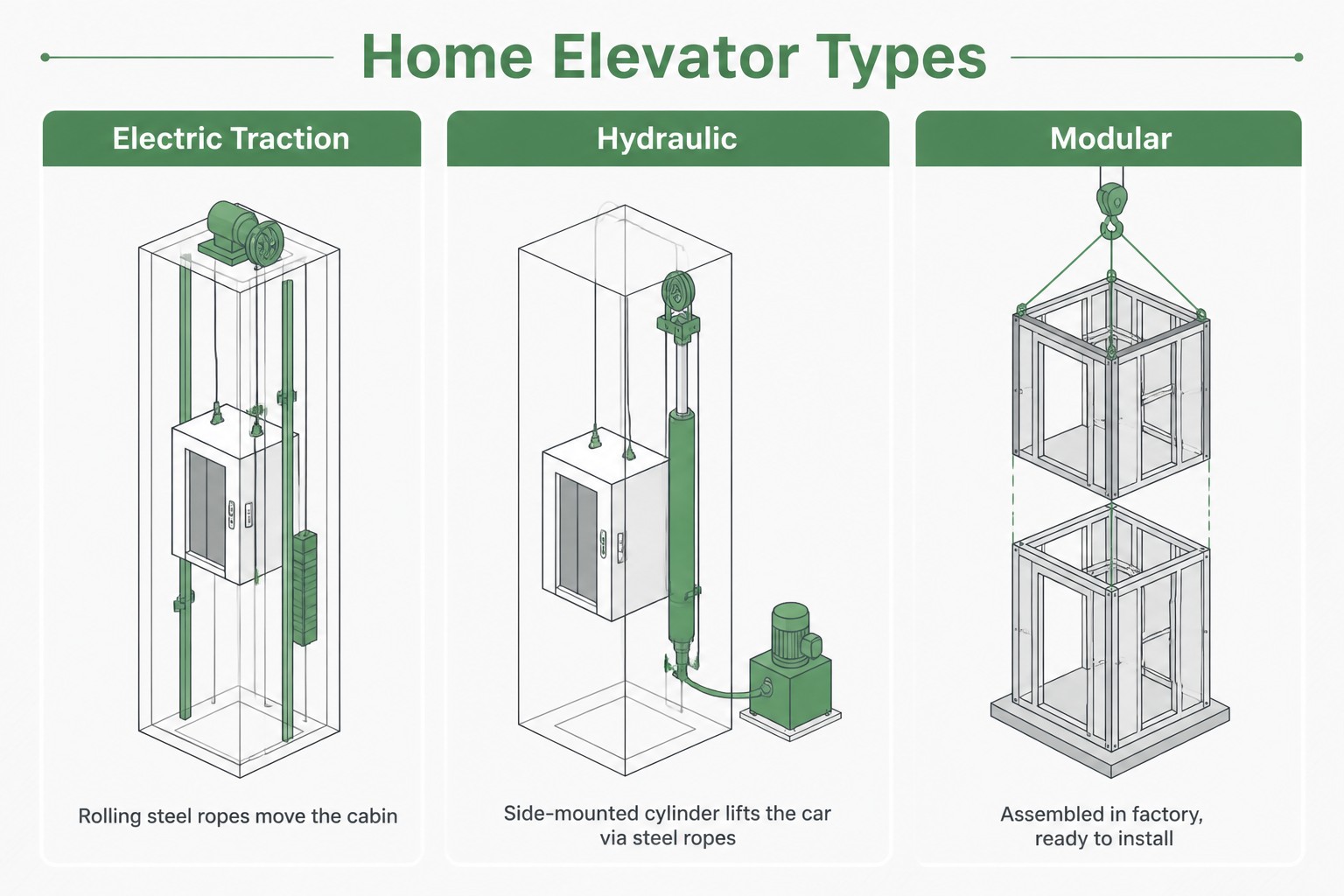
Which drive type fits your home?
| Type | Price (from) | Best for | Note |
|---|---|---|---|
| Hydraulic | $3,000 | 2–3 storey homes, budget-conscious projects | Cylinder installed at the side (not under the car) |
| Traction (MRL) | $8,500 | Quality-focused buyers; quiet, low-maintenance; works from 2 floors up | Quietest, most energy-efficient choice |
Two rules that save money and headaches:
- For 2–3 floors on a budget, a hydraulic elevator is the proven, economical choice.
- If quiet operation, low maintenance, and long-term quality are your priorities, traction is worth the higher investment — it works even for a 2-storey home.
2. Verify the Supplier’s Credentials
A real manufacturer is very different from a trading company. Here’s what to check:
Brand and logo: a surprisingly reliable test
Does the supplier have its own brand — and is it proud of it? A strong, prominent logo on the factory, the equipment, and the products themselves signals a manufacturer that stands behind what it builds. A factory that does not care about its own brand usually does not care much about quality either.
Here is the logic worth remembering: factories without their own brand are usually sourcing (consignment) factories — they produce goods that dozens of trading companies resell. If a company says “we are a factory” but has no brand, no logo, no identity — you are most likely talking to a trading company. And a trading company simply cannot carry the heavy after-sales responsibility that an installation product like a home elevator demands (more on this in Section 5).
Export experience and country-specific research
Ask how many countries the supplier has exported to — and whether they have studied the regulations and certification requirements of your market. A manufacturer with deep export experience has already handled CE certification, local electrical codes, customs documentation, and country-specific installation rules many times. That experience means your project won’t get stuck at the border, at inspection, or on site.
Engineering team
Does the supplier have its own engineers? A genuine manufacturer employs design engineers, electrical engineers, and technical support staff — and can show you. Ask about the size of the engineering team and how they support overseas customers when technical questions come up. This also matters if you later want to develop your own model or brand (see Section 7).
Open factory, anytime: see the craftsmanship live
A manufacturer confident in its quality has nothing to hide. Choose a supplier that is willing to open a video call anytime — showing you the production line, the work in progress, the test tower, and the craftsmanship behind every step. “Anytime you want to see the factory, we’ll show you” is the attitude of a real manufacturer. If a supplier hesitates or makes excuses when you ask to see the factory or the production process, treat it as a warning sign — a trading company cannot show you a workshop that isn’t theirs.
Other basics
- Factory vs. trader — ask for the factory address and verify it is an actual production site, not a rented office. A genuine manufacturer controls quality, cost, and lead time.
- Certifications — CE and ISO 9001 are the minimum for export home elevators. Ask for copies of the certificates.
- Company age and scale — established manufacturers with dedicated production lines are safer partners than newly formed trading desks.
> Tip: Ask the supplier to video-call from the production floor — any time, on short notice. A real manufacturer can show you the production line, the test tower, and the machine room in real time, with their brand clearly visible.
3. Evaluate the Product Quality
Even with good paperwork, elevators differ a lot in design and build quality. Ask these specific questions:
Space and installation requirements
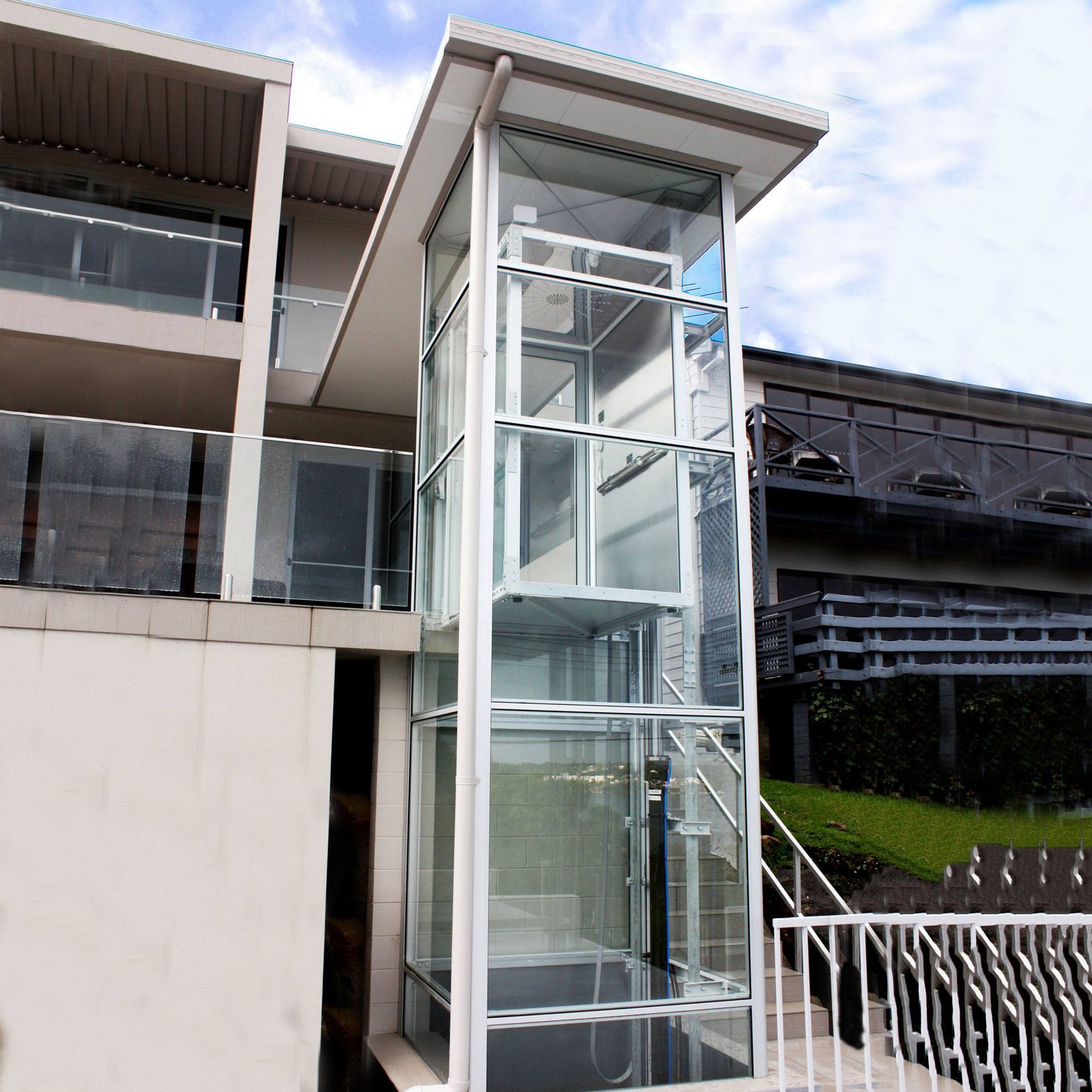
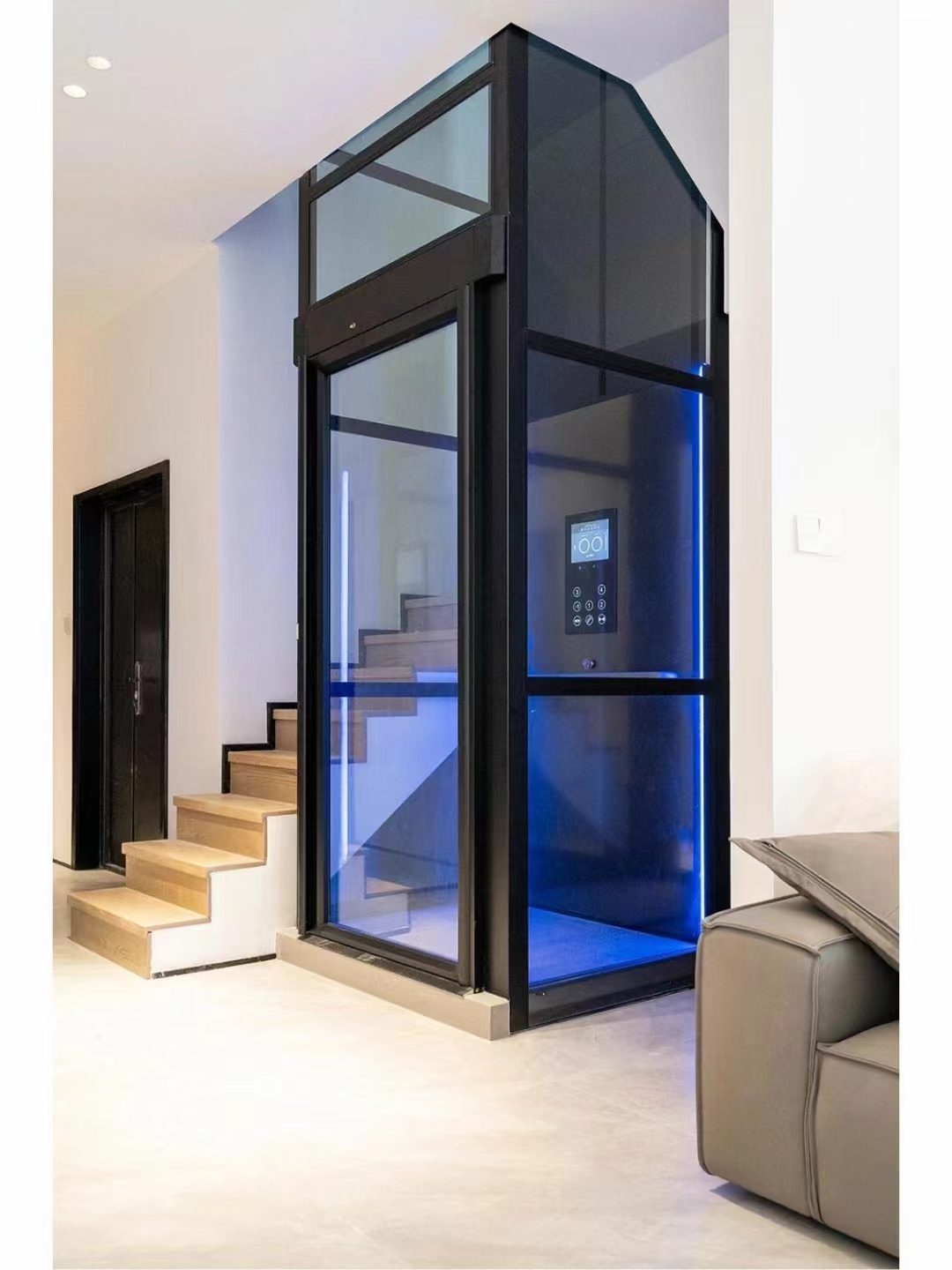
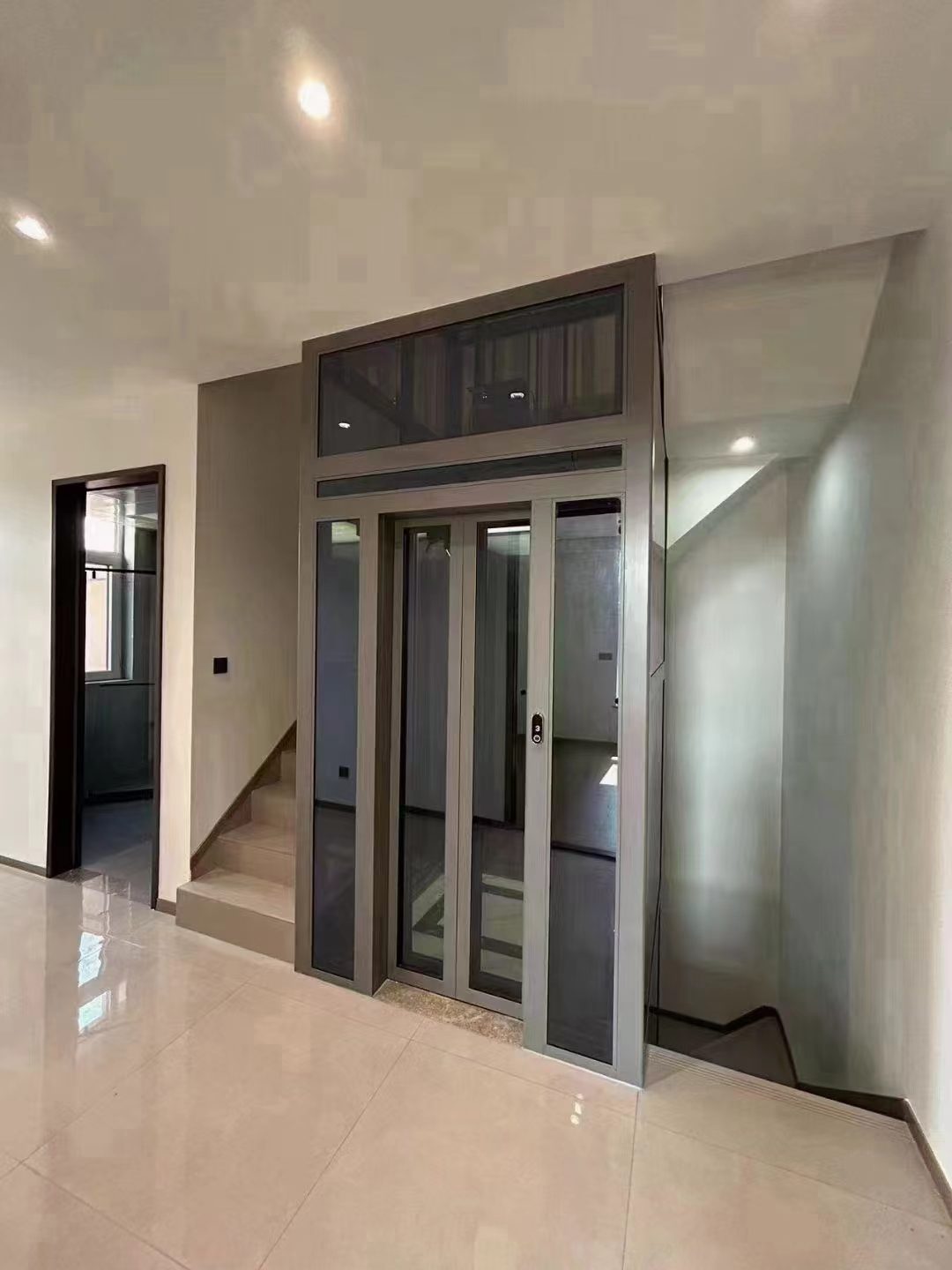
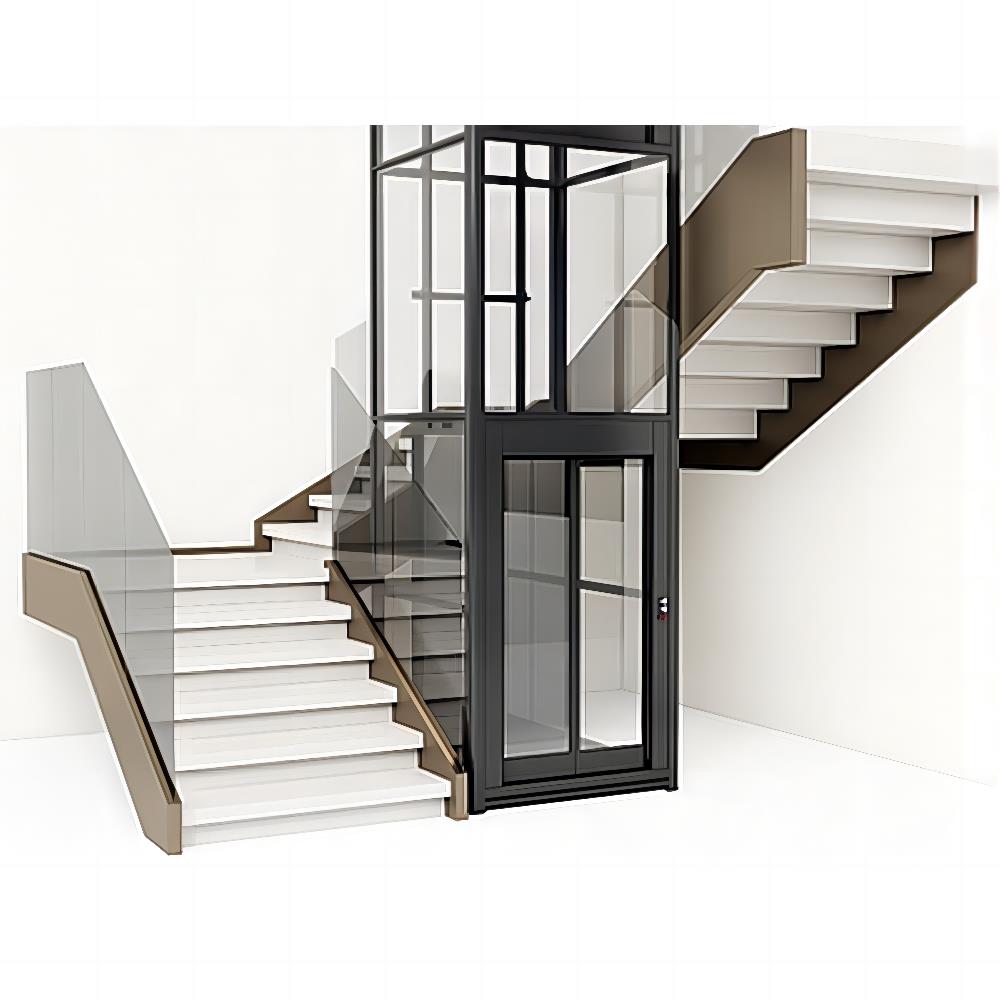
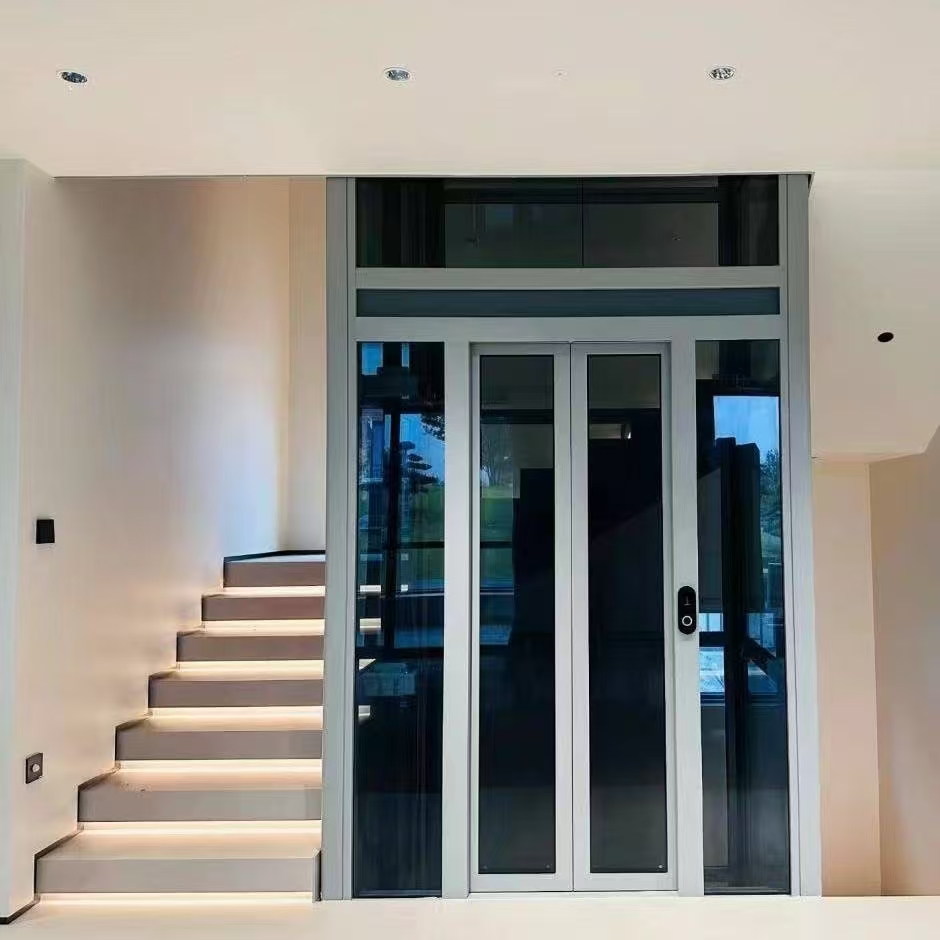
- How compact is the footprint? Modern designs fit from ~1 m² — enough for hallways, stairwells, and room corners.
- Is a pit (deep excavation) required? Quality compact systems can be installed without a pit, which dramatically reduces construction work in existing homes.
Drive system details
- Hydraulic: Where is the cylinder located? A side-mounted cylinder design (not under the car) is easier to service and better suited to home layouts.
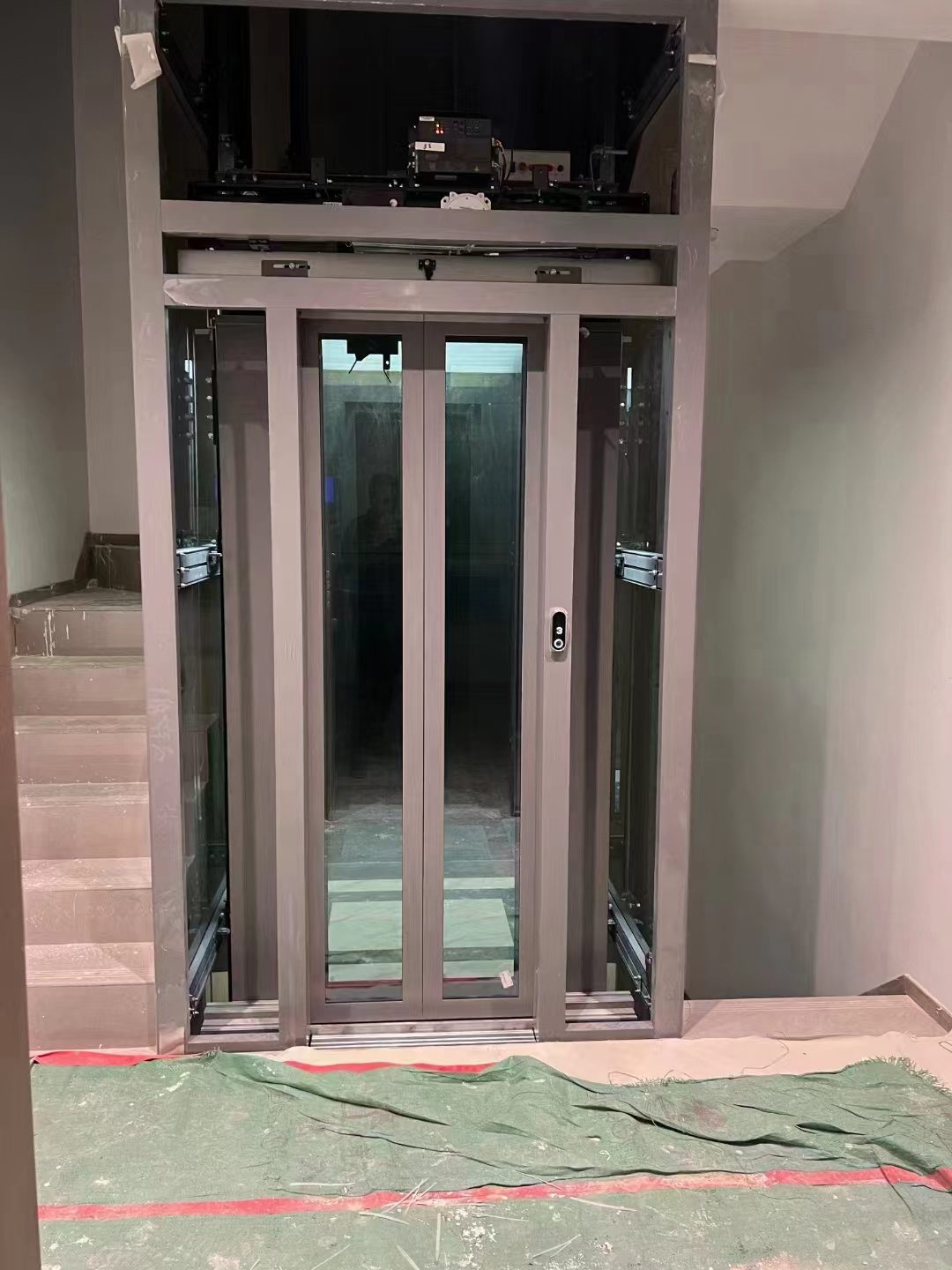
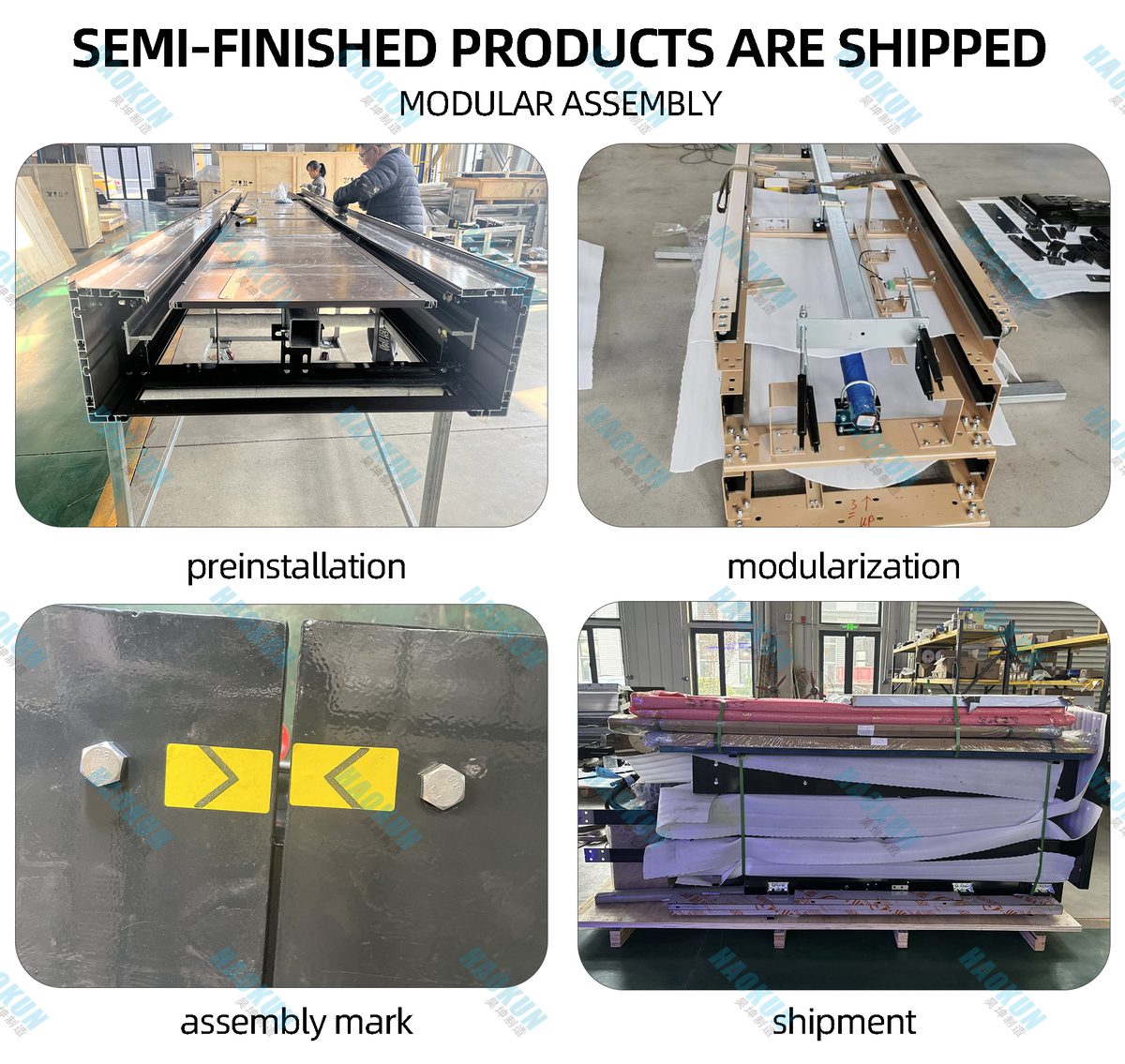
- Traction: Is the machine room-less (MRL)? Are the guide rails factory pre-assembled? Pre-assembly means shorter on-site installation and fewer errors.
Ride and noise
- Ask for the noise level of the drive unit. Traction systems are noticeably quieter than pump-based systems — important when the elevator sits near bedrooms.
- Ask for the power consumption — counterweighted traction drives use less energy over years of daily use.
4. Compare Price Transparently
Low price is not the same as good value — but neither is an inflated quotation. Understand what you’re paying for:
| Component | Typical range (from) | Notes |
|---|---|---|
| Drive unit (hydraulic) | $3,000 | Side-cylinder design, 2–3 floors |
| Drive unit (traction) | $8,500 | MRL, quiet, low-maintenance |
| Enclosure (cladding) | $200/m² | Indoor or outdoor options |
Questions to ask for a transparent quote:
- Is the quotation itemized (drive unit, enclosure, doors, installation, shipping)?
- Are all delivery terms (Incoterms) clear — EXW, FOB, or DDP?
- What is excluded (foundation work, electricity, local permits)?
- Is there a written warranty, and what does it cover?
5. Check Installation and After-Sales Support
A home elevator is only as good as its installation — and its support for years afterward. This is where factories and trading companies differ the most:
Why after-sales support is the real test
- Trading companies cannot carry heavy after-sales. They have no engineers of their own, no spare-parts inventory, and no technical documentation. When something needs fixing, they must go back to the factory that actually made the product — which means you wait longer, pay more, and often get no answer at all.
- A story we see too often: customers who bought from a trading company and could not get their problems solved have later come to HAOKUN for help repairing and servicing the very products they originally bought elsewhere. It happens more often than you would think — and it is exactly the situation you want to avoid.
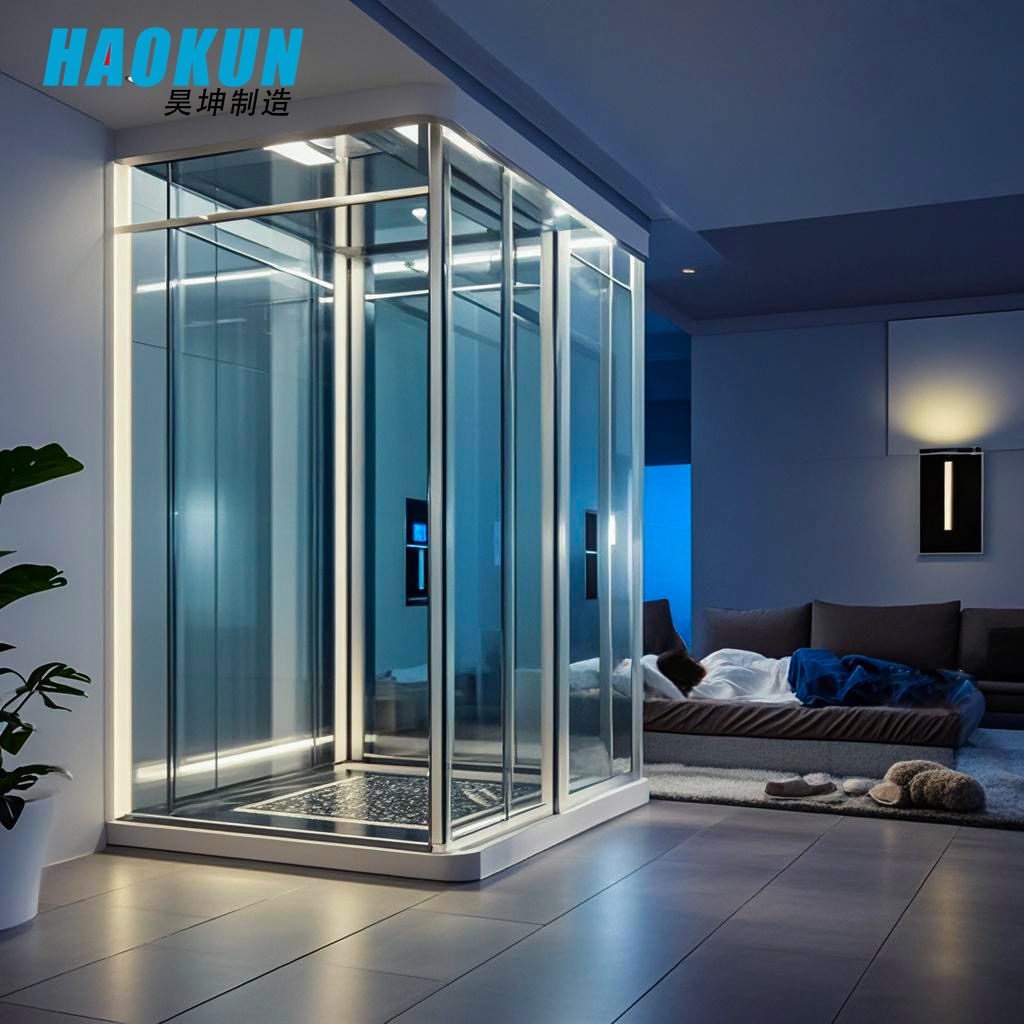
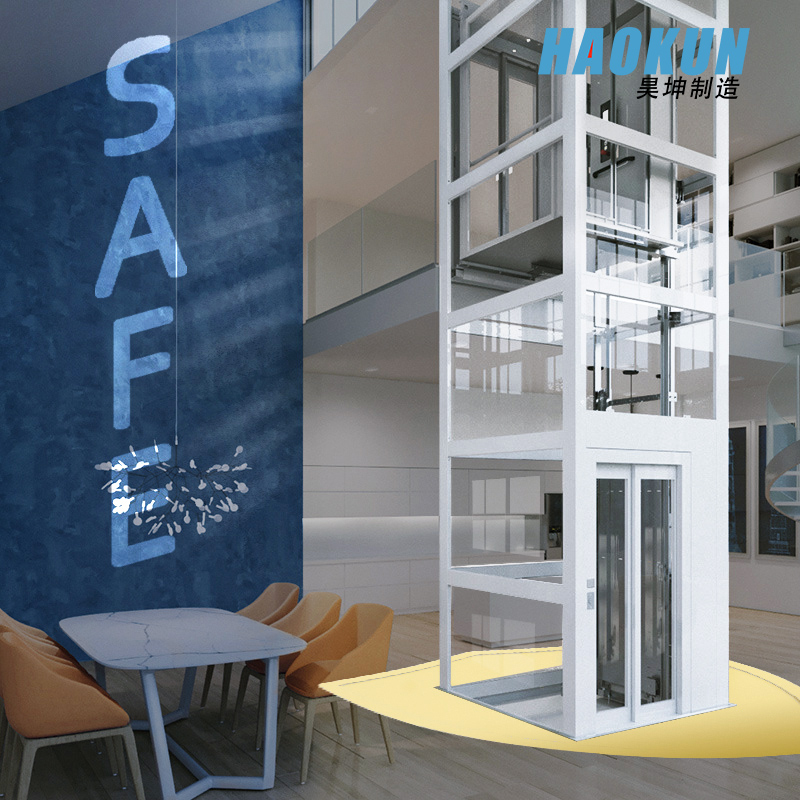
- The best after-sales is a product that never needs it. Quality is decided at the source — design, materials, structure, and production. When every stage of manufacturing is done right, the product is reliable, and after-sales becomes simple. This is the philosophy behind every HAOKUN elevator: get the product right from the start, and service takes care of itself.
 |
 |
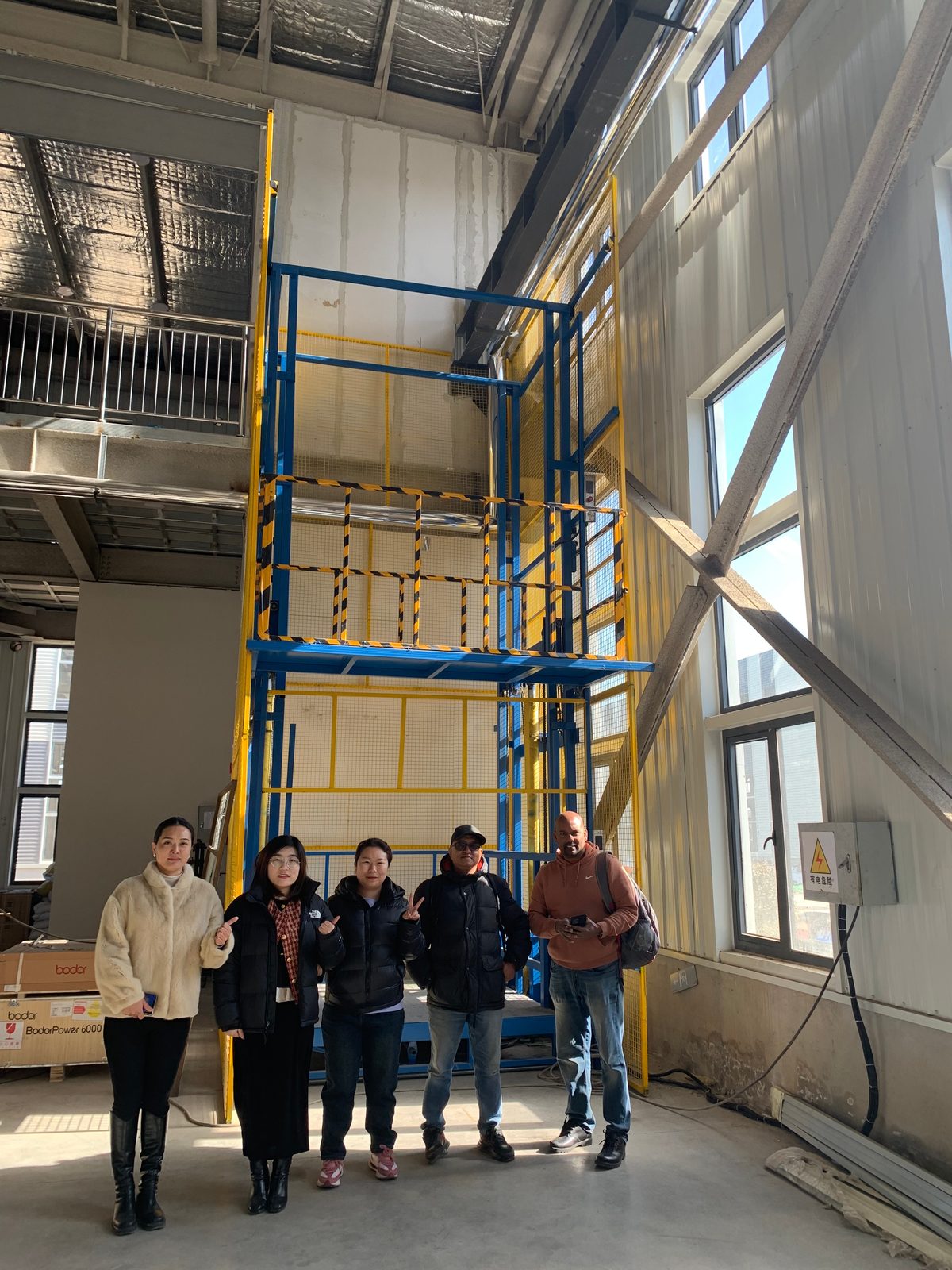
Customers visit us — see for yourself
Every year, buyers from around the world visit the HAOKUN factory to see the production line, meet the engineers, and check the quality with their own eyes. Here are some of our customer visits:
 |
 |
 |
 |
A supplier that welcomes you to its factory anytime — and has the customers to prove it — is a supplier you can trust with your own project.
What a good manufacturer provides
- Factory pre-assembly — most parts and guide rails arrive pre-assembled, saving significant on-site work.
- Professional installation guidance — a dedicated team guides your local installers through the process. For overseas projects, guidance is available worldwide, with the service cost calculated per country.
- Documentation — installation manuals, wiring diagrams, and maintenance schedules in English.
- Spare parts — how quickly can parts be shipped if something fails?
Ask: “Who is responsible if installation goes wrong — you, me, or my local installer?” A clear answer from an actual manufacturer is a good sign.
6. Confirm Customization Capability
Every home is different — the elevator should be too. A good manufacturer offers customization free of charge once the design is approved:
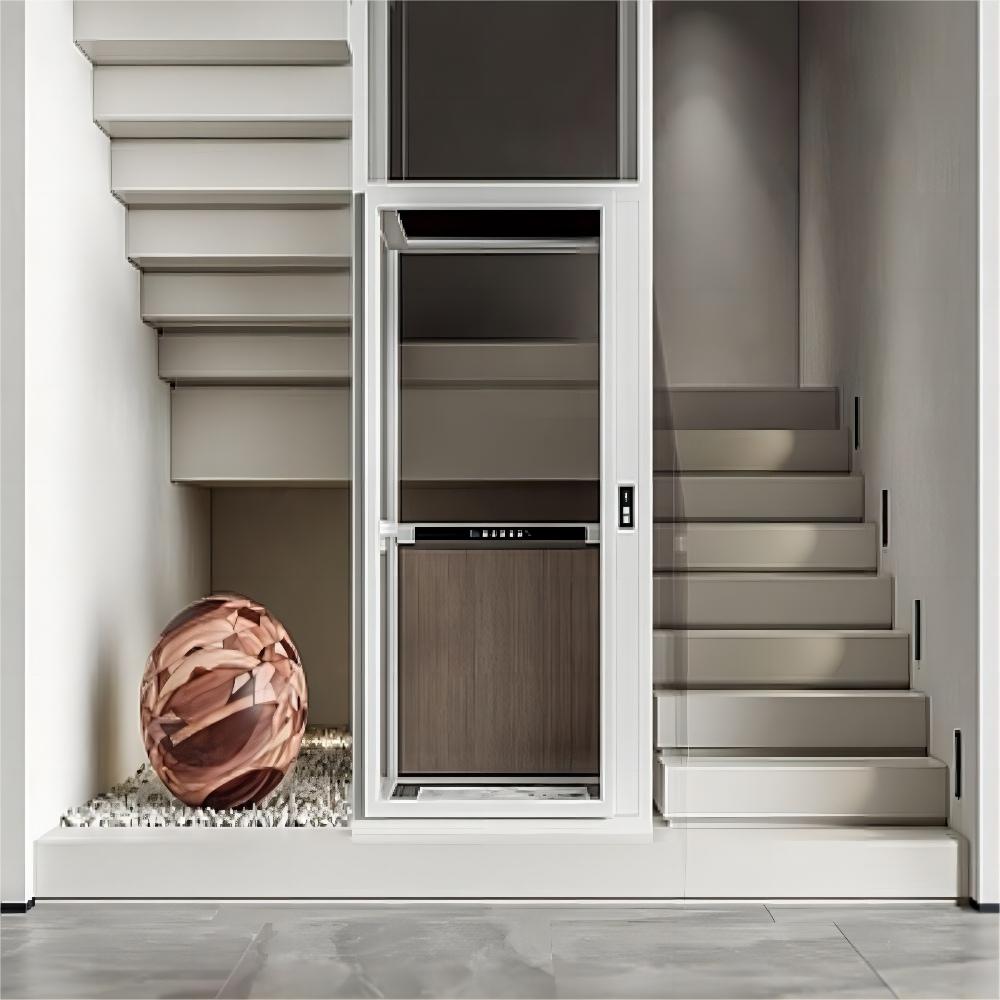
- Cabin size tailored to your space and usage
- Door configuration — single, through-type, manual or automatic
- Interior details — lighting, mirrors, handrails, flooring
- Control options — buttons, key switch, call lock
- Appearance — glass, stainless steel, wood paneling, custom colors; indoor or outdoor enclosure
A supplier who only sells fixed models may not fit your home. A supplier who designs around your floor plan is a partner, not just a vendor.
7. Build Your Own Brand (OEM/ODM)
HAOKUN elevators were designed for export from day one. The result: simple installation and connection that local installers can handle quickly — no complex on-site work, no special tooling, no surprises.
If you want to develop your own product line or launch your own brand, we have a strong development team — and we are able and happy to help you build it. From private-label designs to fully customized models, OEM/ODM is part of what we do. You bring the market and the vision; we bring the engineering, the factory, and the experience.
Red Flags to Watch Out For
| Red flag | Why it matters |
|---|---|
| No own brand or logo | Often a sourcing factory resold by traders — you are probably dealing with a trading company |
| No factory address or video tour | Likely a trading company with no quality control |
| Won’t show the factory on video | Real manufacturers are proud to show production anytime — hesitation is a warning sign |
| No CE / ISO certificates | Cannot legally import or certify in many countries |
| No engineering team | No one to answer technical questions or support installation |
| Vague, non-itemized quote | Hidden costs later |
| “Any type works for any home” | No engineering judgment — a sign of a reseller |
| No installation documentation | High risk of failed on-site installation |
| Pressure to pay in full upfront | Legitimate manufacturers work with structured payment terms |
Final Checklist Before You Order
- Confirmed drive type (hydraulic for 2–3 floors on budget, traction for quiet and quality)
- Verified factory status — own brand, own logo, own engineering team
- Confirmed the supplier can show factory and production on video, anytime
- Verified certifications (CE, ISO 9001) and export experience in your market
- Confirmed footprint fits (from ~1 m², no pit required)
- Received an itemized quotation with clear Incoterms
- Confirmed factory pre-assembly and installation guidance
- Approved the customization design in writing
- Reviewed the warranty and spare-parts policy
- Confirmed OEM/ODM support if you plan your own brand
Frequently Asked Questions
Q: Should I buy from a factory or a local dealer?
A: For most international buyers, a direct factory purchase gives the best price, customization, and after-sales support, while your local installer handles on-site work. Many factories, including HAOKUN, provide professional installation guidance for overseas projects (cost calculated per country).
Q: How can I tell a factory from a trading company?
A: Check three things: does the company have its own brand and logo on its factory and products? Can they video-call you from the production floor? Do they have their own engineering team? No brand, no factory tour, no engineers — you are probably dealing with a trader, and traders struggle with the heavy after-sales an elevator needs.
Q: How much does a home elevator cost?
A: Drive units start from $3,000 (hydraulic) or $8,500 (traction); enclosures from $200/m². Total cost depends on floors, size, and options.
Q: Can a home elevator be installed in an existing house?
A: Yes. Compact designs from ~1 m² with no pit required make retrofit installation practical in most homes.
Q: Can I sell home elevators under my own brand?
A: Yes. HAOKUN supports OEM/ODM — our development team can design and produce models under your brand, with simple installation built in from the start.
Ready to Find the Right Partner?
Send the HAOKUN team your floor plan and requirements — you’ll receive 3D design drawings and an itemized quotation within 24 hours, from a factory with its own brand, its own engineering team, and full CE and ISO 9001 certification.
Contact HAOKUN:
- Phone: +86 132 1058 1168
- Email: sales01@haokungroups.com
- Website: haokungroups.com