
Quick answer: Service life is decided mainly by three things — your installation environment, the steel frame material, and the manufacturing process. A well-built home elevator typically serves a home for 15–25 years or more with proper maintenance, and in demanding environments such as coastal areas it is the anti-corrosion specification that makes that lifespan achievable. On whole-machine maintenance, traction elevators are the better long-term choice.
Key Facts at a Glance
- Main lifespan factors: usage environment, steel frame material, and craftsmanship
- Typical service life: roughly 15–25 years with regular maintenance; the structure usually outlives the drive and control components
- Coastal / high-corrosion environments: the main frame should be fully hot-dip galvanized, with a galvanizing thickness of 80 μm — engineered to deliver a 25-year service life
- Chemical plants, food plants, and other special environments: the protection process is customized to your environment
- Hydraulic systems: simple and robust — but the cylinder’s rubber-based seals age over time, and they are the main long-term service item
- Traction (MRL) systems: simpler and faster maintenance with lower long-term cost — our recommendation
- Parts and support: guaranteed parts, plus a team able and willing to provide long-term maintenance resources and technical service
- Certification: CE and ISO 9001
- Customization: cabin, doors, controls, and interior details — free once the design is approved
Ranges are general planning references, not guarantees. Actual service life depends on environment, usage, maintenance, and component quality.
1. What Actually Decides a Home Elevator’s Lifespan
Three things matter most — your usage environment, the steel frame material, and the process quality behind them:
| Factor | Why it matters | What to check |
|---|---|---|
| Usage environment | Coastal salt air, chemical exposure, humidity, and temperature swings all attack metal | A protection process matched to your actual environment |
| Steel frame material and coating | The frame is the load-bearing skeleton — its corrosion protection decides structural life | Frame material, galvanizing thickness, and coating specification |
| Manufacturing process | Design, materials, structure, and production decide how the machine ages | A manufacturer with its own engineering team and certified processes |
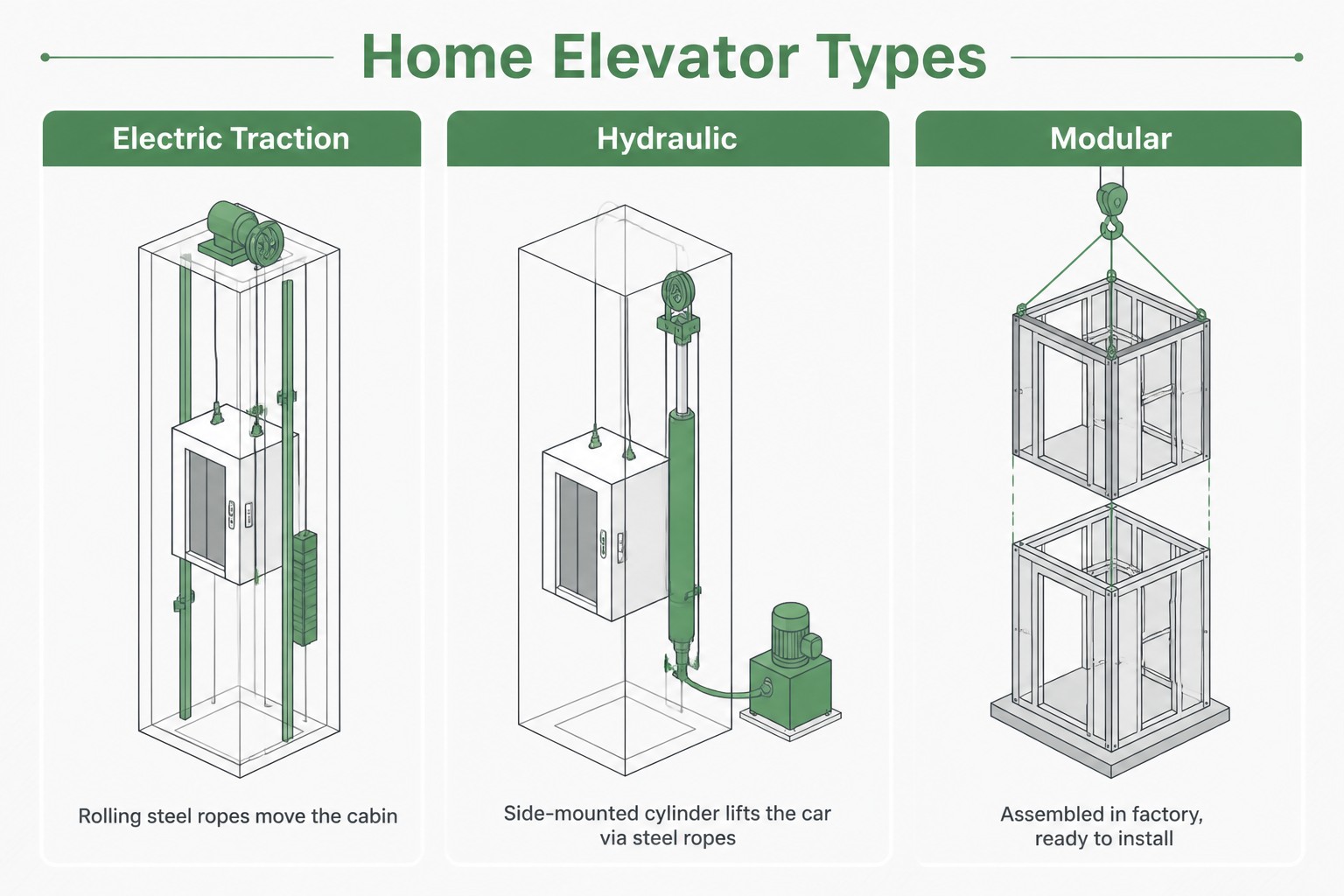
| Drive type | Hydraulic and traction wear in different ways | Hydraulic: robust and simple; Traction: quiet, low maintenance |
| Maintenance and support | Small scheduled checks prevent large failures | Guaranteed parts and a team that stays with you |
Quality is decided at the source. When design, materials, structure, and production are all done right, the product is reliable — and reliability is what buys you decades.
2. Harsh Environments: Coastal, Chemical, and Food-Plant Installations
This is where ordinary equipment fails early.
A coastal example. In coastal regions the air is highly corrosive. Standard inland anti-corrosion processes — ordinary paint, standard surface treatment — simply cannot hold up for a sufficient number of years. A coastal installation needs a special anti-corrosion process, and at minimum the main frame must be fully hot-dip galvanized. With a galvanizing thickness of 80 μm, the frame is engineered to deliver a 25-year service life in coastal conditions.
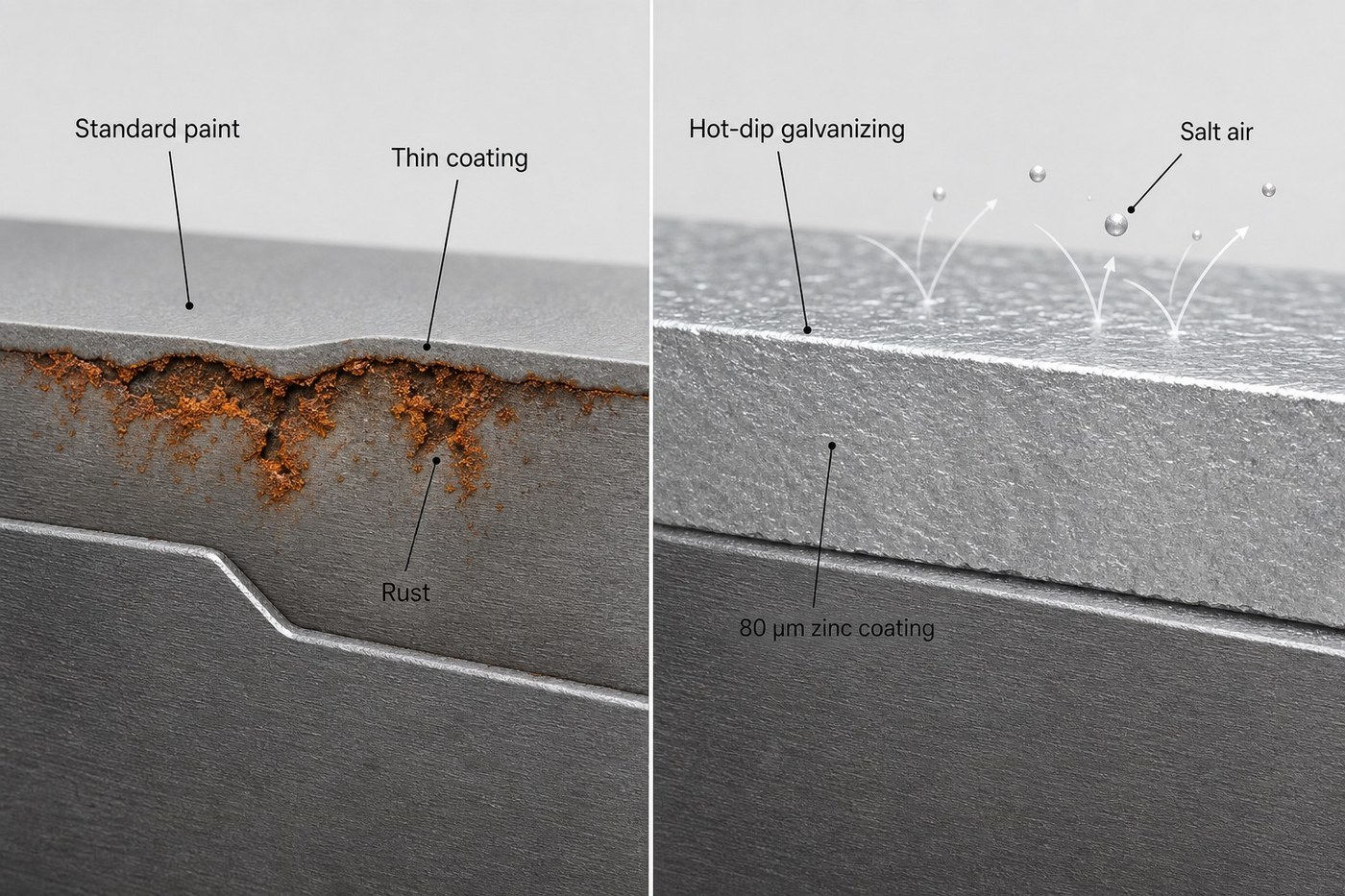
And coastal is not the only demanding environment. Seaside locations, chemical plants, food-processing facilities and similar sites each expose the elevator to a different combination of salt, chemicals, moisture and hygiene requirements. For these, the surface and protection process must be customized to your specific environment — there is no single off-the-shelf answer.
What this means for your supplier choice: this kind of engineering cannot be improvised. It requires a manufacturer with real experience, its own process capability, and the willingness to design the specification around your site — which is exactly how we work with our customers.
3. Typical Service Life by Component
| Component | Typical service life | Notes |
|---|---|---|
| Structure: guide rails, frame, shaft | Longest — often 30+ years | Rarely replaced; it protects the whole system |
| Cabin and door system | ~15–25 years | Doors are the most-used moving parts |
| Hydraulic drive unit | ~10–20 years with service | Cylinder seals and the power unit are the main service items |
| Traction (MRL) drive unit | ~15–25 years with service | Fewer wearing parts; quiet and low maintenance |
| Control system | ~10–20 years | Electronics age faster than mechanics; often the first upgrade |
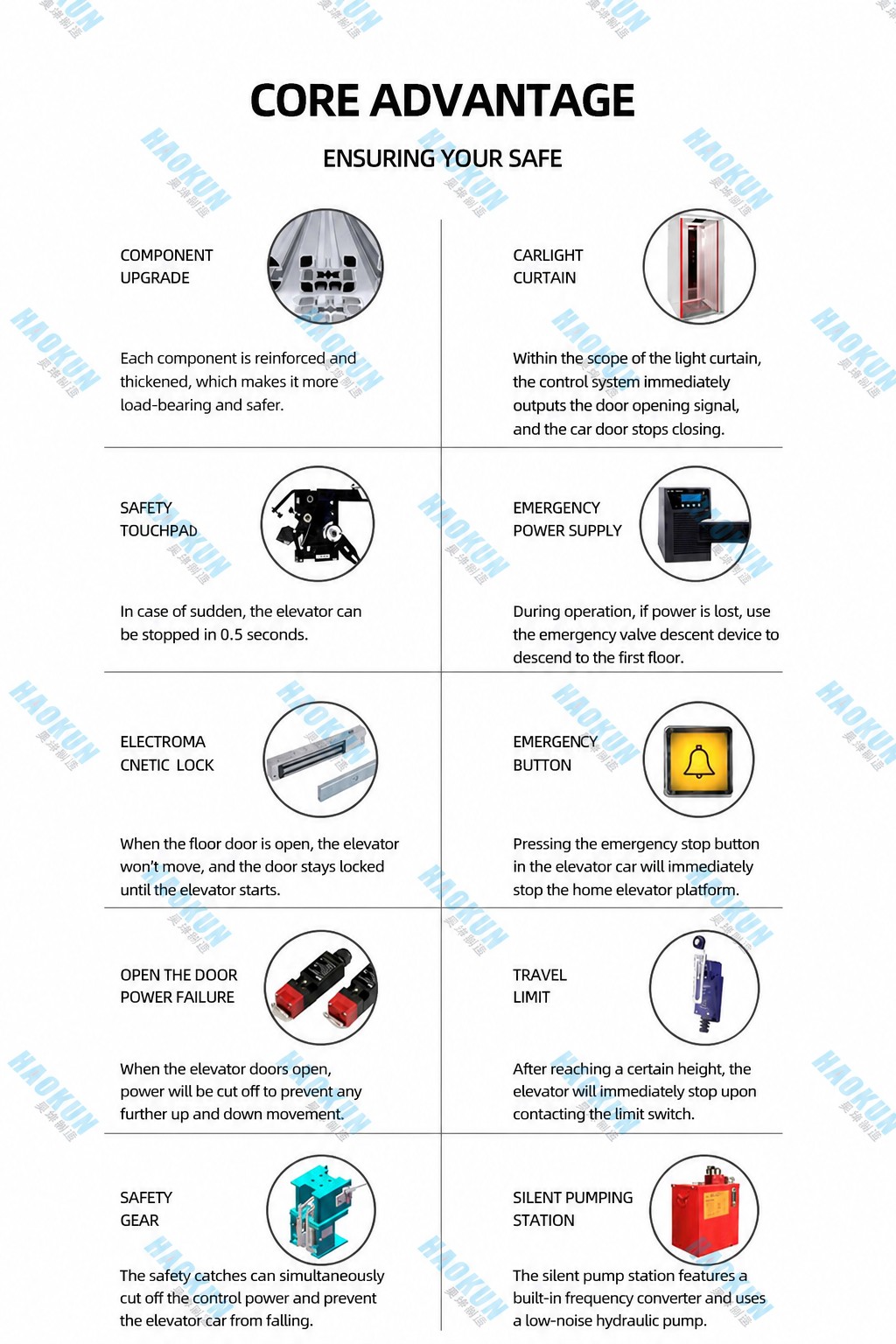
| Safety devices | Serviced on schedule | Never compromise on safety components |
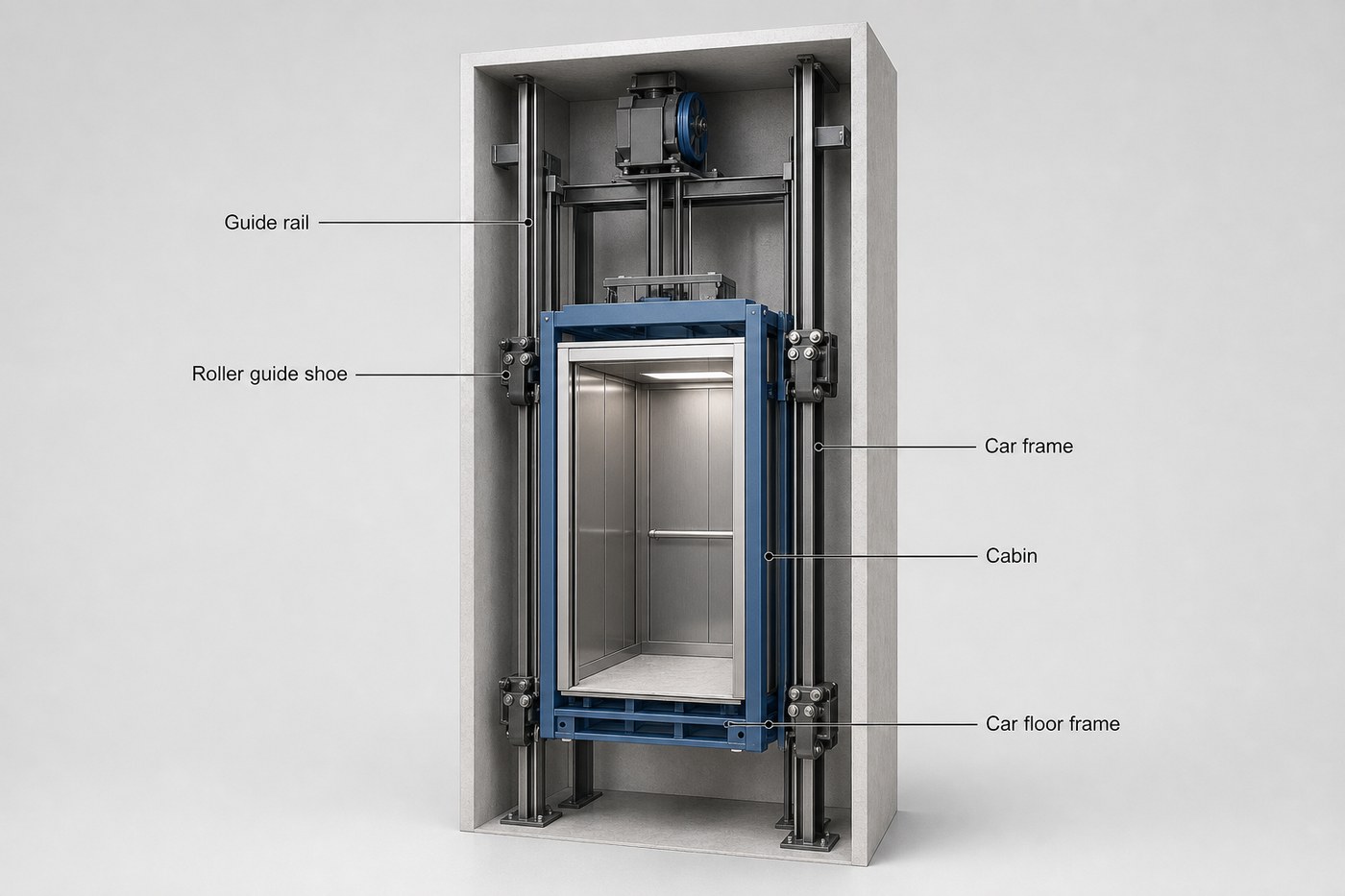
The pattern is consistent: mechanical structure lasts longest, electronics age fastest, and doors take the most wear.
4. Hydraulic or Traction? The Long-Term Maintenance Question
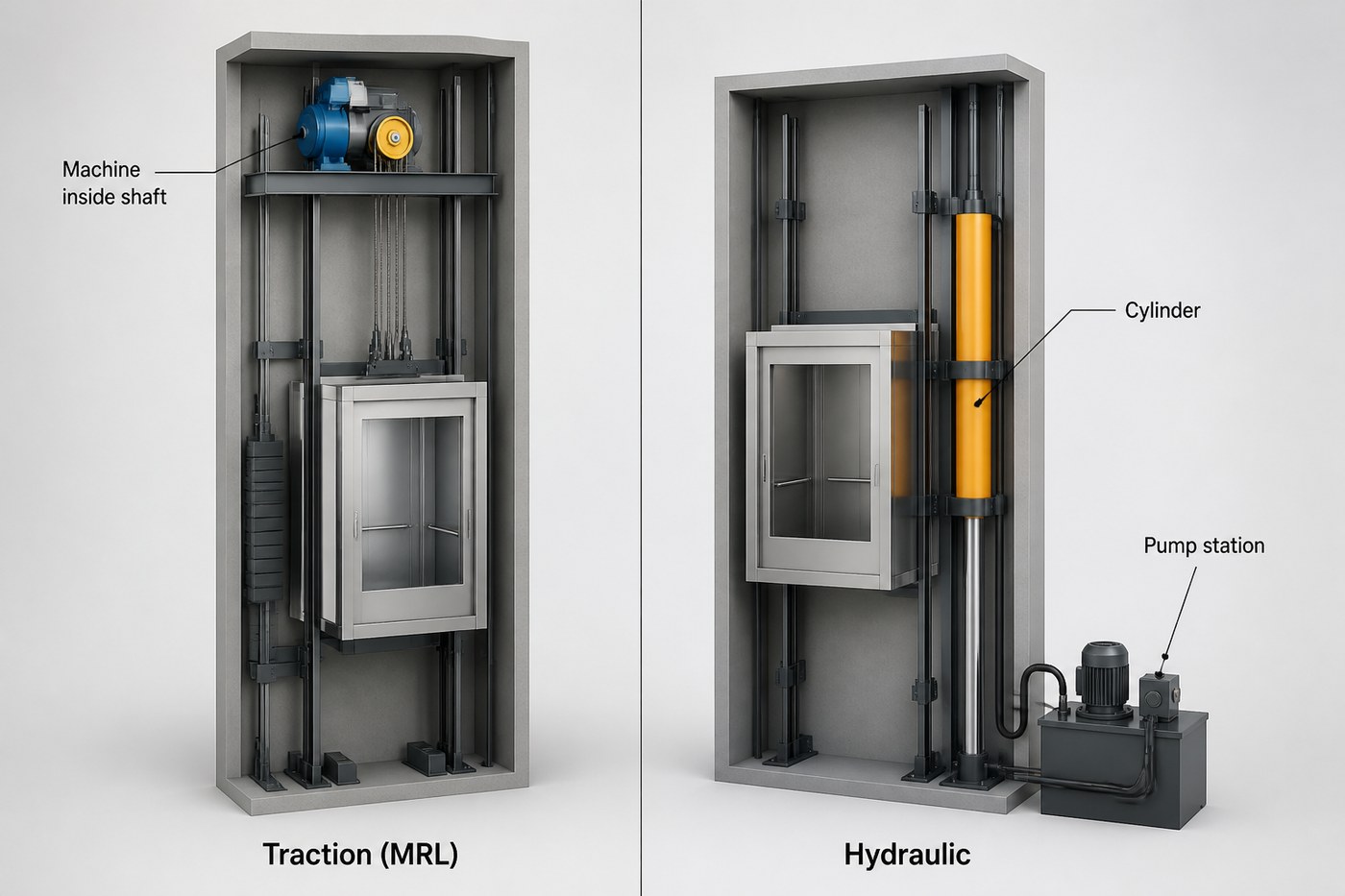
Both drive types work, and both can serve a home for many years. But their long-term maintenance profiles are different — and that difference has a real cost.
Hydraulic systems have an inherent technical and structural characteristic. The cylinder is sealed by sealing rings made of rubber-based materials. Over time these seals age. After a certain number of years, even when the cylinder body itself is still sound, oil leakage and seepage can appear. Solving this means replacing the seals — or, in some cases, replacing the cylinder body. This work requires a capable after-sales technical service team to carry it out properly.
The cost calculation most buyers miss. For low-rise users who choose a hydraulic home elevator, the long-term cost over the machine’s life works out to roughly the same as the money saved at purchase. The lower upfront price is offset later by seal and cylinder servicing, plus the labour to carry it out.
Traction elevators are simpler on the maintenance side. Servicing is faster and more straightforward, and long-term maintenance costs are relatively lower. Traction (MRL) systems also run quietly, require low maintenance, and work from 2 floors up — so they are not limited to tall houses.
Our recommendation: for whole-machine maintenance and lifetime cost, choose traction. Hydraulic remains a reasonable choice where the upfront budget is the deciding factor — but go in knowing what the long-term service picture looks like.
5. Parts, Warranty, and Long-Term Support
Elevator technology itself is mature. What separates suppliers is the materials they use, the strength of the company, and whether they can and will provide long-term technical support and effective maintenance support.
- Guaranteed parts from a guaranteed factory — spare parts should come from a manufacturer that will still be there, with documentation, when you need them
- A team with the ability, the resources, and the willingness — long-term maintenance resources and technical service cannot be improvised
- A written whole-machine warranty — ask for the warranty terms in writing and confirm exactly what is covered
- What a real manufacturer provides: a detailed installation manual and tutorial, engineer dispatch, and cooperating installation crews with professional after-sales service in every country we serve
- A caution worth knowing: trading companies cannot carry heavy after-sales — they have no engineers, no parts stock, and no technical documentation of their own. We have seen customers who bought elsewhere, could not get their problems solved, and later came to us for help with the very products they bought from someone else
- The best after-sales is a product that never needs it — which is why quality goes into design, materials, structure, and production first
6. How to Extend the Life of Your Elevator
- Match the protection process to your environment — hot-dip galvanizing for coastal and other corrosive sites
- Keep to the maintenance schedule — the single highest-impact habit
- Use guaranteed parts — correct spares protect the whole system
- Keep the shaft and cabin clean — dust and debris accelerate wear on doors and rails
- Avoid overloading the cabin — stay within the rated load
- Use the doors as intended — don’t force them or hold them open unnecessarily
- Protect outdoor installations — correct enclosure and drainage from day one
- Fix small problems early — noises, minor leaks, and slow doors are early warnings
- Keep service records — they help any technician diagnose faster
7. Why Build Quality Matters More Than the Calendar
Two elevators installed in the same year can have very different lives. The difference is decided long before installation — in design, materials, structure, and production:
- Designed for export from day one — simple connection and straightforward installation, without complex on-site work
- Factory pre-assembled guide rails and modules — less site work, fewer installation errors, and a machine that runs true from the first trip
- Full quality control across design, materials, structure, and production — so the product itself is right, and after-sales stays simple
- CE and ISO 9001 — certified for export markets
And if you want to develop your own product or your own brand, we have a strong development team and are able and happy to help you build it — OEM/ODM is part of what we do.
8. Repair, Refurbish, or Replace?
| Situation | What usually makes sense |
|---|---|
| Structure sound, drive unit ageing | Replace the drive unit — usually the most cost-effective path |
| Hydraulic cylinder leaking, seals aged | Replace seals or the cylinder — requires a capable service team |
| Doors and controls worn, cabin dated | Refurbish — new doors, controls, and cabin interior |
| Several systems failing at once | Compare refurbishment against a new compact unit (from ~1 m², no pit) |
| The home is being renovated anyway | The best moment for a full upgrade — civil work is already happening |
Because modern compact elevators need about 1 m² and no pit, replacing an old unit is far less disruptive than many owners expect.
9. Cost of Ownership: The Reference Numbers
| Item | Price (from) | Notes |
|---|---|---|
| Hydraulic drive unit | $3,000 | Ideal for 2–3 floors |
| Traction (MRL) drive unit | $8,500 | Quiet, low-maintenance, works from 2 floors up; lower long-term maintenance cost |
| Enclosure (cladding) | $200/m² | Indoor or outdoor options |
The total depends on travel height, cabin size, door configuration, environment, and options — and customization is free once the design is approved. Send your floor plan and tell us about your environment; we will return 3D design drawings and an itemized quotation within 24 hours.
Frequently Asked Questions
Q: How long does a home elevator last?
A: With proper maintenance, a well-built home elevator typically serves a home for 15–25 years or more. Service life depends mainly on the installation environment, the steel frame material, and the manufacturing process.
Q: What if I live in a coastal or high-corrosion area?
A: Standard inland anti-corrosion treatment is not enough. The main frame should be fully hot-dip galvanized with a coating thickness of 80 μm, which is engineered to deliver a 25-year service life in coastal conditions. For chemical plants, food plants, and similar environments, the process is customized to the site.
Q: Which lasts longer — hydraulic or traction?
A: Both are durable when serviced. Hydraulic cylinders are sealed with rubber-based sealing rings that age over time, and leakage can eventually require new seals or a new cylinder. Traction (MRL) systems are simpler and faster to maintain with lower long-term costs, so for whole-machine maintenance we recommend traction.
Q: Is hydraulic really cheaper over the long run?
A: For low-rise users, the long-term cost of a hydraulic elevator works out to roughly the same as the money saved at purchase, once seal and cylinder servicing is included.
Q: Does a home elevator need a lot of maintenance?
A: No. A household elevator is lightly used compared with commercial lifts. Scheduled routine checks — and fixing small issues early — are what keep it running for decades.
Q: Can spare parts still be supplied after 10 years?
A: This is exactly why the supplier matters. A real manufacturer with its own engineering team and documentation can keep supporting a machine for its whole life; a trading company usually cannot.
Q: Do outdoor elevators last as long?
A: With a proper enclosure and correct drainage — and the right anti-corrosion specification — an outdoor installation has a long service life. Weather protection is the key factor.
Q: What warranty should I ask for?
A: Ask for the whole-machine warranty in writing and confirm what it covers, who performs the work, and how spare parts are supplied. Compare the warranty terms, not just the price.
Q: How much does a home elevator cost?
A: Drive units start from $3,000 (hydraulic) or $8,500 (traction); enclosures from $200/m². Cabin and door customization is included once the design is approved.
Q: Who installs and services it?
A: Your local cooperating installation crew or our dispatched engineers, guided by a detailed manual and tutorial. Professional after-sales service is available in every country we serve.
Planning a Home Elevator That Lasts?
Send the HAOKUN team your floor plan and tell us about your environment — you’ll receive 3D design drawings and an itemized quotation within 24 hours, from a factory with full CE and ISO 9001 certification.
Contact HAOKUN:
- Phone: +86 132 1058 1168
- Email: sales01@haokungroups.com
- Website: haokungroups.com