
Purchasing a home elevator is a significant investment — one that directly affects your family’s safety, comfort, and property value. When you’re importing from an overseas manufacturer, the stakes are even higher. The right supplier can deliver a high-quality product at a competitive price with smooth installation. The wrong one can leave you with unexpected costs, compliance issues, and years of frustration.
This guide walks you through every step of the process, from identifying a qualified supplier to completing installation successfully.
1. Clarify Your Requirements Before Contacting Suppliers
Before you start reaching out to manufacturers, get clear on exactly what you need. Suppliers will ask these questions, and having answers ready puts you in a stronger negotiating position.
Define your specifications:
| Specification | What to Decide |
|---|---|
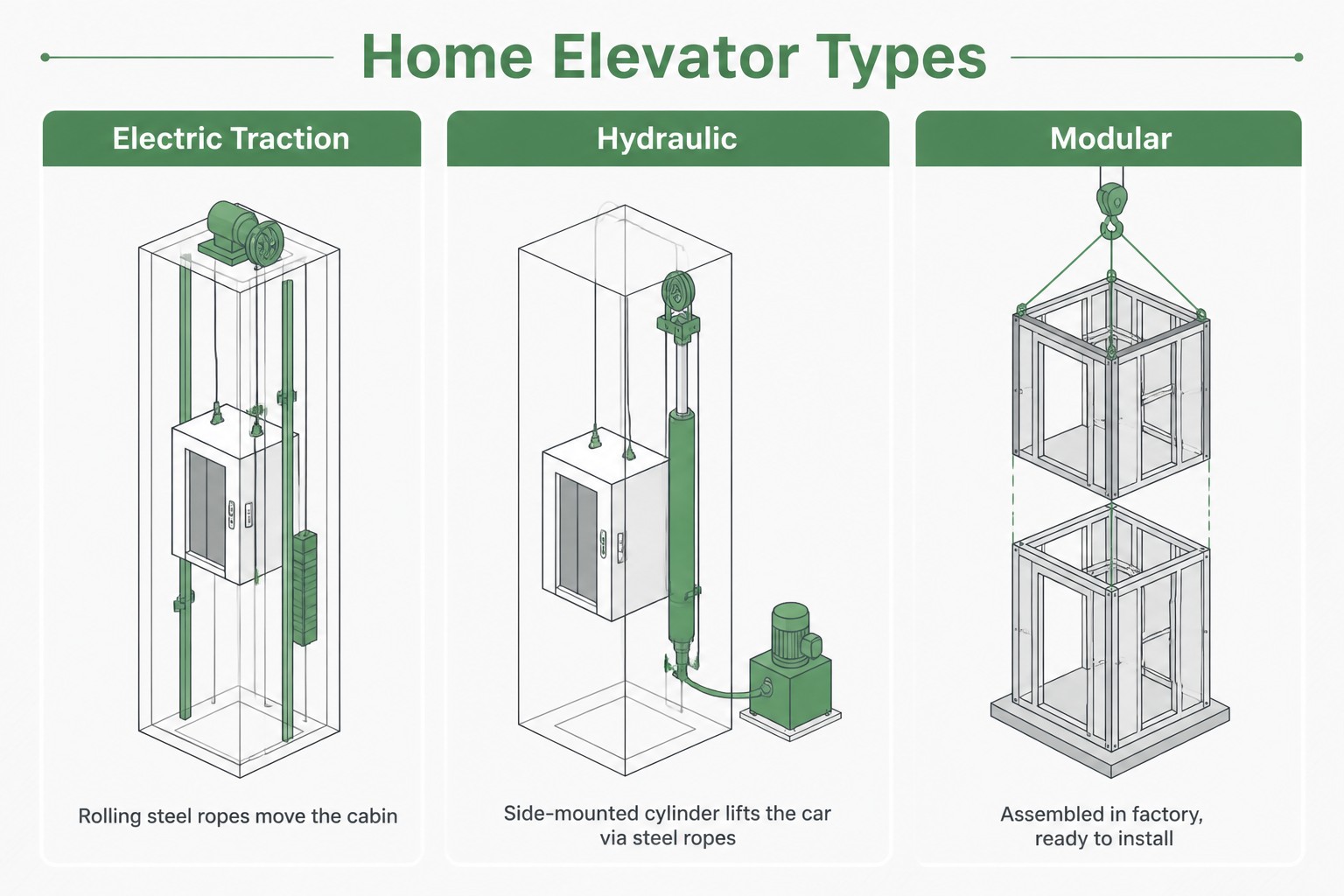
| Drive type | Hydraulic (smooth, heavy-duty, needs equipment room) vs. Traction (quiet, energy-efficient, machine-room-less option) |
| Number of floors | How many stops? Ground to 1st floor? Basement included? |
| Load capacity | Typically 250–400 kg for home use (3–5 persons) |
| Platform/cabin size | Measure your available shaft space or planned location |
| Shaft type | Do you have a concrete shaft, or do you need a self-supporting steel structure? |
| Door configuration | Single entry or through-type (front and rear doors)? Manual or automatic? |
| Design preferences | Cabin finish (stainless steel, glass, wood paneling), lighting, flooring |
| Building type | New construction, renovation, or retrofitting into an existing home? |
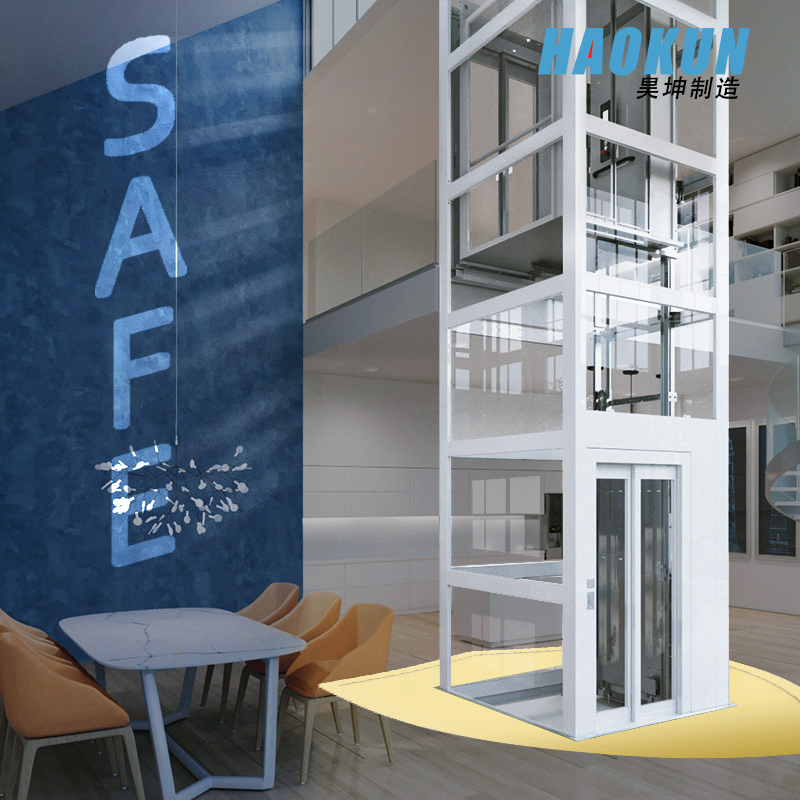
| Installation space | HAOKUN models fit compact spaces from as little as 1 m² — no pit required |
Know your local regulations:
- Research your country’s elevator safety standards (EN 81-41 in Europe, ASME A17.1 in North America, etc.)
- Find out what certifications are required for legal installation
- Check whether your local authority requires a permit before installation begins
- Understand inspection requirements — some countries require third-party inspection before the elevator can be used
Going into supplier conversations with this information demonstrates that you’re a serious buyer and helps you quickly filter out suppliers who can’t meet your requirements.
2. How to Evaluate Potential Suppliers
Choosing the right manufacturer is the single most important decision you’ll make. Here’s how to separate reliable partners from risky ones.
2.1 Company Background and Track Record
Years in business:
- Look for manufacturers with at least 8–10 years of experience in home elevators specifically — not just general lifting equipment. Home elevators have different design requirements, safety standards, and aesthetic expectations than industrial lifts.
- A company that has been through multiple economic cycles and international regulatory changes is more likely to be stable and reliable.
Production scale:
- Visit the factory if possible. If an on-site visit isn’t feasible, ask for a video tour. What you want to see: organized production lines, quality control stations, testing areas, and finished products ready for shipment.
- Inquire about annual output. A manufacturer producing hundreds or thousands of units per year has mature processes. A workshop making a handful of units may struggle with consistency.
Export experience:
- Has the supplier exported to your country or region before? A supplier familiar with your local standards, documentation requirements, and logistics avoids costly learning curves.
- Ask for examples of projects they’ve completed in your country or nearby markets.
2.2 Certifications and Compliance
Certifications are your primary tool for verifying a supplier’s quality commitment.
Core certifications to look for:
| Certification | What It Covers | Why It Matters |
|---|---|---|
| ISO 9001 | Quality management system | Confirms the manufacturer has documented, auditable quality processes — not just a claim |
| CE Marking | Compliance with EU health, safety, and environmental standards | Mandatory for products entering the European Economic Area |
| EN 81-20 / EN 81-50 | European elevator safety standards | Specific to elevator design, manufacturing, and installation safety |
| ASME A17.1 / CSA B44 | North American elevator safety code | Required for the US and Canadian markets |
| TÜV / Intertek / SGS | Third-party product testing and certification | Independent verification adds credibility beyond self-declared compliance |
How to verify certifications:
- Ask for certification numbers and verify them on the issuing body’s website. Genuine certifications are traceable — a certificate that can’t be verified online is a red flag.
- Check the scope of certification. ISO 9001 for “trading company” is not the same as ISO 9001 for “design and manufacturing of home elevators.”
- Be wary of suppliers who claim “CE certified” but can’t provide the Declaration of Conformity or technical file.
2.3 Technical and Engineering Capability
A true manufacturer should demonstrate more than just assembly capability.
Questions to ask:
- Do you have an in-house engineering and design team, or do you outsource design?
- Can you provide custom solutions based on my architectural drawings?
- Do you perform finite element analysis (FEA) on structural components?
- What testing does each elevator undergo before shipping? Ask to see the test checklist and sample test reports.
Red flags that suggest limited capability:
- The supplier can only offer standard sizes with no customization
- They can’t explain the technical rationale behind their design choices
- They don’t have documented testing procedures
- Their technical documentation is sparse or looks translated by software
3. Understanding the Buying Process
The typical import process for a home elevator follows these stages:
Stage 1: Inquiry and Quotation (1–2 weeks)
- You submit your requirements (specifications, quantity, destination country)
- The supplier provides a preliminary quotation including:
– Elevator unit price
– Estimated shipping cost (FOB or CIF terms)
– Delivery timeline
– Payment terms
– Warranty scope and duration
What to check in the quotation:
- Is everything itemized? A lump-sum quote hides details. You should see separate line items for the elevator, shipping, installation supervision (if included), and any optional extras.
- What exactly is covered by the warranty? Main structural components? Motor? Electrical system? For how long?
- Are spare parts included? At minimum, the first set of wear parts (seals, filters, brake pads) should be part of the package.
Stage 2: Technical Confirmation and Contract (2–4 weeks)
- The supplier creates detailed drawings based on your shaft dimensions and requirements
- You (or your local architect/engineer) review and approve the drawings
- Both parties sign a sales contract specifying:
– Exact product specifications and configuration
– Price, payment schedule, and currency
– Delivery date and shipping terms (Incoterms)
– Warranty terms and after-sales service commitments
– Dispute resolution mechanism
Contract must-haves:
- Penalty clause for delivery delays beyond the agreed window
- Clear specification of which party handles customs clearance, duties, and taxes
- Installation responsibility — is the supplier sending a technician, or are you hiring locally?
- Return/replacement policy for defective parts
Stage 3: Production and Quality Control (6–10 weeks)
- The manufacturer produces your elevator to the agreed specifications
- Before shipping, the elevator should undergo factory acceptance testing (FAT)
- If possible, hire a third-party inspection company (SGS, Bureau Veritas, TÜV) to inspect the elevator before it leaves the factory. This typically costs $300–800 and is money well spent.
What factory acceptance testing should include:
- Full assembly and operational test
- Load capacity verification
- Safety system function test (overspeed governor, safety gear, door interlocks)
- Electrical system check
- Surface finish and cosmetic inspection
Stage 4: Shipping and Logistics (4–8 weeks)
- The elevator is packed for sea freight (typically in a wooden crate with moisture protection)
- Shipping documents are prepared: commercial invoice, packing list, bill of lading, certificate of origin
- The shipment is loaded and transported to your destination port
Logistics tips:
- Confirm whether your supplier handles shipping or whether you need a freight forwarder
- Understand your Incoterms: FOB means you’re responsible from the port onward; CIF means the supplier covers freight and insurance to your port
- Factor in port handling fees, customs duties, and inland transportation to your site
- Inspect the crate immediately upon arrival for any signs of damage. Document and photograph anything suspicious before signing the delivery receipt.
Stage 5: Installation and Commissioning (1–4 weeks)
- A qualified installation team (supplier’s engineer, local partner, or your own contractor) installs the elevator
- After installation, the elevator is commissioned — all systems are calibrated, tested, and adjusted
- Final safety inspection by the relevant local authority or third-party inspector
- Handover: you receive the operation manual, maintenance schedule, and warranty documentation
4. How to Verify a Supplier’s Qualifications and Capabilities
Beyond asking for certificates, here are concrete methods to verify what a supplier claims:
4.1 Factory Audit
Before placing an order, conduct a factory audit — either in person or through a third party. Key areas to examine:
- Production floor: Is it organized and clean? Are workers following documented procedures? Is there visible quality control activity?
- Testing equipment: Does the factory have a test tower for full-height elevator testing? Load testing equipment? Electrical testing instruments?
- Raw material storage: Are materials properly stored and labeled? This indicates supply chain management maturity.
- Finished goods area: Do completed elevators look consistent? Are they properly packed for export?
- Documentation center: Are design files, test records, and quality reports organized and accessible?
4.2 Reference Checks
Ask for contact information for 3–5 previous customers — preferably in your region or with similar projects.
Questions to ask references:
- Did the elevator arrive as specified and on schedule?
- Were there any quality issues, and how did the supplier handle them?
- How was the installation experience? Was technical support adequate?
- How has the elevator performed since installation? Any recurring problems?
- Would you buy from this supplier again?
A supplier who can’t or won’t provide references is a significant concern.
4.3 Sample and Documentation Review
Request the following before committing:
- Sample material swatches: Cabin wall materials, flooring options, handrail samples
- Component datasheets: Motor specifications, control system brand and model, safety gear manufacturer
- Sample test report: A redacted version of a recent factory test report, showing what they actually test
- Installation manual: Review it for completeness and clarity. A poorly written manual suggests poor attention to detail.
4.4 Communication Assessment
The quality of communication during the sales process strongly predicts the quality of support you’ll receive later.
Positive signs:
- Responses are prompt (within 24 hours), specific, and technically informed
- The supplier asks detailed questions about your project before quoting
- They proactively mention regulations, compliance, and potential challenges
- Communication is available in your language or through a competent English-speaking contact
Warning signs:
- Vague answers to technical questions
- Overpromising on price, timeline, or capabilities
- Reluctance to provide documentation or references
- Poor English communication with no alternative contact available
5. Critical Precautions and Common Pitfalls
5.1 Price Traps
The “too good to be true” price: A home elevator quoted at half the market price usually means corners have been cut somewhere — thinner steel, cheaper components, skipped testing.
Hidden costs to budget for:
- Customs duties and import taxes (typically 5–15% depending on your country)
- Port handling, customs brokerage, and inland transport
- Local structural work — if your shaft needs reinforcement or modification
- Electrical work — power supply and wiring to the elevator location
- Local certification and inspection fees
- Installation labor (if not included in the supplier’s package)
- Spare parts for the first year of operation
Rule of thumb: Budget an additional 30–40% on top of the elevator unit price to cover all related costs.
5.2 Compliance Gaps
The most common and costly problem is an elevator that doesn’t meet local safety standards.
Protect yourself:
- State the required standards explicitly in the contract (e.g., “must comply with EN 81-41 and carry CE marking”)
- Have a local elevator consultant or engineer review the technical documentation before production starts
- Never accept a supplier’s verbal assurance that “our products comply with your local standards” — get it in writing with specific standards cited
5.3 After-Sales Black Holes
An imported elevator without local support becomes a liability the first time it needs service.
Before ordering, confirm:
- Does the supplier have a service partner or agent in your country?
- How are spare parts ordered and shipped? What’s the typical delivery time?
- Is remote technical support available (video call, remote diagnostics)?
- What is the procedure if a major component fails under warranty?
- Can the supplier provide installation training for your local technician?
5.4 Payment Safety
International transactions carry inherent risk. Structure payments to protect yourself:
| Milestone | Typical Payment |
|---|---|
| Contract signing | 30% deposit |
| Factory acceptance test passed | 40% |
| Shipment ready / documents provided | 20% |
| Installation completed and accepted | 10% |
Additional protection:
- Use a letter of credit (L/C) for first-time transactions — it adds cost but reduces risk
- Never pay the full amount upfront, regardless of what discount is offered
- Conduct a background check: verify the supplier’s business license, export license, and any trade dispute history
5.5 Installation Pitfalls
Even a perfectly manufactured elevator can fail if installed incorrectly.
- Shaft dimensions must be verified on-site before production starts, not estimated from architectural drawings. Even a 20 mm error can cause major installation problems.
- The installation team must be qualified for this specific type of elevator. General construction workers should not install elevators — the precision and safety requirements are fundamentally different.
- Power supply must meet the elevator’s specifications. Voltage, phase, and frequency must match — an elevator designed for 380V/50Hz won’t work properly on a 220V/60Hz supply without a transformer.
6. Checklist: Before You Sign the Contract
Use this checklist to make sure nothing has been overlooked:
Supplier verification:
- Business license and export license verified
- Key certifications confirmed (CE, ISO 9001, EN 81, or local equivalents)
- Factory audit completed (in person or via third party)
- At least 2–3 customer references contacted with positive feedback
- Export experience to your country or region confirmed
Product and technical:
- Detailed drawings reviewed and approved by your local engineer
- Compliance with local safety standards confirmed in writing
- Component specifications reviewed (motor brand, control system, safety gear)
- Sample materials and finishes approved
- Factory acceptance testing procedure agreed upon
Commercial and logistics:
- All costs itemized (elevator, shipping, duties, installation, inspection)
- Payment milestones clearly defined with balanced risk distribution
- Delivery timeline with penalty clause for delays
- Incoterms clearly specified
- Customs documentation requirements confirmed
After-sales:
- Warranty scope and duration clearly defined (what’s covered, what’s excluded)
- Spare parts package included
- After-sales support arrangement confirmed (local partner or remote support)
- Installation supervision or training arrangement in place
- Maintenance manual and operation manual to be provided
7. Summary: The Ideal Supplier Profile
When importing a home elevator, you’re looking for a supplier that demonstrates:
- Technical depth — in-house engineering, documented testing, and custom design capability
- Compliance rigor — verifiable certifications and willingness to meet your local standards
- Export maturity — experience shipping to your region with proper documentation
- Communication quality — prompt, detailed, and technically competent responses
- After-sales commitment — a clear plan for ongoing support, not just a one-time sale
The cheapest quote rarely represents the best value. The right supplier delivers a safe, compliant product, supports you through installation, and stands behind their equipment for years afterward. Taking the time to verify thoroughly before you commit is the best investment you can make in your home elevator project.
HAOKUN has been manufacturing and exporting home elevators and lifting equipment for over 20 years. We hold ISO 9001, CE, and international safety certifications, and have successfully delivered projects across Europe, North America, the Middle East, and Asia Pacific. Our engineering team provides customized solutions, 3D design drawings, and technical support throughout your project. Contact us for a consultation and detailed quotation.
Contact HAOKUN:
- Phone: +86 132 1058 1168
- Email: sales01@haokungroups.com
- Website: haokungroups.com